

Bernard K. Mensah is a Senior Software Engineering Manager and an award-nominated children’s book author whose stories celebrate African culture and authentic experiences through a child’s lens. Born and raised in Ghana, Bernard now lives in the UK with his two sons—the inspiration behind every story he writes.
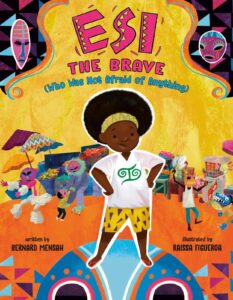
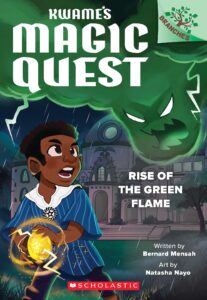
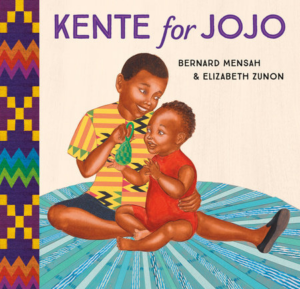
His debut picture book, Esi the Brave (Who Was Not Afraid of Anything) (Dial Books, 2024), received starred reviews from Kirkus and Shelf Awareness. His Kwame’s Magic Quest early chapter book series (Scholastic Branches, 2024) brings Ghanaian folklore and magic to young readers. His 2025 releases include the starred-review picture book Kente for Jojo (Knopf), which celebrates the legend and tradition of Kente cloth, and Sunshine Baby, Bofrot Cheeks (Little Bee Books), a joyful father-son story sprinkled with Twi vocabulary. His self-published titles The Rainy Day Zoo and Rambunctious Kwame showcase the power of imagination rooted in Ghanaian culture.
Bernard’s forthcoming books include My Child (Chronicles Books) and a spooky early reader series from Candlewick—continuing his mission to create books that showcase African culture through a child’s lens, ensuring representation at every age.
As co-founder of Black Creators in Kid Lit and founder of HabermanNerds, Bernard is committed to nurturing and promoting authentic African storytelling in children’s literature. When he’s not managing platform engineering or writing manuscripts, he’s researching African folklore, studying the craft of picture books, or planning his next research trip to Africa for a book.
He is represented by Natalie M. Lakosil at Looking Glass Literary and Media.
The Journey: My Path to Publishing
I never set out to be a children’s book author. I was climbing mango trees and playing pilolo in Ghana. Then I was a senior software engineering manager, leading teams, analyzing data, optimizing systems.
But I was also a father to two young British-Ghanaian boys who loved books—and I couldn’t find enough stories where they saw themselves.
My father got me hooked on books when I was growing up in Ghana. He’d make regular trips to the library because I read so fast he couldn’t keep up. I passed that same love to my kids. But as they grew, I made a promise to myself—a selfish mission, really: at every age, my sons would be able to see themselves on their bookshelf. Stories about Ghana that felt real—vibrant, complex, modern, traditional, joyful. Stories where they could see themselves and their heritage without having to choose between their British identity and their Ghanaian roots.
So I started writing them.
I grew up in Ghana—climbing trees that didn’t belong to me, fishing in overflowing rivers during rainstorms, racing through books my dad brought from the library. Those experiences shaped everything. I wanted my sons to have books that captured that same sense of wonder, adventure, and cultural pride.
The path wasn’t straightforward. I self-published The Rainy Day Zoo and Rambunctious Kwame to prove the concept—that Ghanaian stories, African stories, could connect with kids everywhere. I queried agents while running sprint planning meetings. I revised manuscripts during early mornings and late nights between family time and work deadlines, while also supporting Black Creators in Kid Lit across different time zones. I brought some analytical thinking from engineering, but the creative process stayed messy and beautiful.
When Natalie Lakosil at Looking Glass Lit offered representation, I knew I’d found someone who got the vision. When Chronicles Books acquired My Child, then Penguin Random House acquired Esi the Brave, then Scholastic acquired the Kwame’s Magic Quest series, then Knopf acquired Kente for Jojo, it felt like proof that these stories mattered.
Now, with books from Chronicles, Penguin Random House, Scholastic, Little Bee Books, and Candlewick, I’m building the library I wished existed when my sons were younger. Each book is intentional: showing African children they belong in every genre, every story, every dream—representation at every age.
I’m still an engineer. I still lead teams and build platforms. But I’m also a creative, a storyteller committed to authentic representation, and that dual identity makes me better at both.
The Process: How I Work
My creative process is messy, iterative, and deeply personal—nothing like the methodical spreadsheets you might expect from an engineer.
I try to write an idea, get blocked, and read it many times over. I’m always working on multiple books simultaneously because when I can’t answer a question about pacing in one manuscript, or figure out how to make the next page turn work, I look for inspiration by trying to solve that same challenge in a different book. I have books I’ve been working on for years that are only 700 words long and still aren’t finished. The process is about patience, experimentation, and trusting that the answer will come.
I’m inspired by authors like Kwame Alexander, Jacqueline Woodson, and Tomi Adeyemi, and African storytellers like Nnedi Okorafor and Kwame Mbalia—studying how they use rhythm, restraint, and visual storytelling to build emotional arcs. But I don’t analyze with spreadsheets. I read their work, absorb it, let it inform my instincts.
It’s been a journey finding my voice. Early on, I was trying to sound like other authors I admired. Now I love that every one of my books has its own voice. It’s me, yes—but the rhythm and pacing and character of each book is its own thing. Esi the Bravehas a breathless, tumbling energy. Kente for Jojo is lyrical and reverent. Kwame’s Magic Quest is fast-paced adventure. Each story demands its own music.
Research is non-negotiable. For Esi the Brave, I researched Ghanaian festivals, the Kakamotobi tradition, how sensory overwhelm affects children. For Kente for Jojo, I researched the legend of Kente cloth, Akan weaving traditions, the symbolism embedded in different patterns. I even travelled to the places Kente was made and tried it. For the Kwame’s Magic Quest series, I dove deep into Ghanaian folklore, Akan cosmology, traditional magic systems—then wove them into fast-paced adventure that feels both authentic and accessible to 6-8 year olds.
For every book, I verify cultural authenticity. I consult with family. I read research papers, I check Twi translations. I ensure the Africa in my books reflects reality—not a sanitized, simplified version for Western audiences.
The writing happens in margins—early mornings, late nights, between managing teams and supporting other Black Creators across different time zones. But those constraints force clarity and intention.
Voice analysis is crucial. Picture books are read aloud, so every word has to earn its place sonically. I read manuscripts aloud (usually while walking, which gets me strange looks), testing rhythm and flow. I read them to my sons and watch where they tune out.
My agent Natalie pushes me to go deeper, find the emotional core. Editors challenge me to trust young readers with complexity. The back-and-forth is where the book becomes what it needs to be.
The process is slow, creative, and deeply collaborative. But it produces books I’m proud to put in my sons’ hands—books that honor African heritage while meeting the highest standards of craft.
The State of the Industry: Facts, Insights, and Opinions
The children’s book industry has made real progress on diversity. But from where I sit—as a Ghanaian author, a British author, working in a US-dominated market—I can see both how far we’ve come and how far we still need to go.
We’re still overwhelmingly centered on American stories. I write for African children, but I navigate a market where “diverse” often defaults to African American experiences. Those stories are vital and necessary—but they’re not the only Black stories. Black British children exist. African children exist. Ghanaian children who aren’t defined by trauma exist. Caribbean diaspora children exist. We need publishers willing to invest in authentic global Black stories beyond the US perspective.
“Own Voices” became a marketing buzzword faster than it became a practice. I believe deeply in Ghanaian stories told by Ghanaian authors, African stories told by African storytellers. But I’ve seen publishers embrace the language of diversity while still learning how to do the deeper work: hiring diverse editors who understand cultural nuance, building diverse lists that go beyond single “diversity” titles, paying diverse authors equitably, marketing our books with the same energy as mainstream releases.
We’re still having to explain why these stories matter. I’m often asked if stories about kente cloth or Ghanaian festivals are “universal enough”—a question that rarely seems to come up for other kinds of stories. The assumption that African stories need to prove their relevance is exhausting. Ghana has 30+ million people. Nigeria has over 200 million. Kenya has 50+ million. The entire African continent has over 1.4 billion people. The African diaspora spans the globe. These are not niche stories.
The “Africa” problem. Publishers sometimes treat “Africa” as monolithic. My Ghanaian experience is vastly different from someone from Kenya, Nigeria, or South Africa. Yet we’re often lumped together as “African stories.” The continent has 54 countries, thousands of ethnic groups, hundreds of languages. We need specificity, not generalization.
But here’s what gives me hope:
Publishers like Chronicles, Penguin Random House, Scholastic, Little Bee Books, and Candlewick are taking risks on authentic stories. Editors like Ariel Richards, Michelle Lee, Katie Carella, Charlie Ilgunas, Kate Fletcher, and Rotem Moscovitch are championing these voices and doing the work to bring authentic African stories to young readers. Agents like Natalie are building strategic partnerships to support diverse authors. Authors are supporting each other, sharing opportunities, building community through initiatives like Black Creators in Kid Lit.
Kids are hungry for these books. Teachers, librarians, parents—they’re asking for them. The market is there. I’ve seen it in school visits, in reader feedback, in the way children light up when they see African culture portrayed with joy and accuracy.
What would help:
- Parity in advances for diverse authors doing comparable work
- Marketing investment beyond “diversity” months and Heritage celebrations
- More diverse editors who bring cultural competence and lived experience
- Recognizing that global Black stories aren’t niche—they’re global because Black people are global
- Understanding that authentic doesn’t mean “difficult” or “less commercial”
- Acknowledging that the diaspora exists—British-Ghanaian, French-Ivorian, German-Nigerian children deserve their stories too
I came to publishing as an outsider—an engineer, a Ghanaian author in a US/UK market, someone who self-published before traditional deals. That perspective helps me see the full picture.
The books are getting made. The stories are being told. Now we need the industry infrastructure to support them fully—not as charity, not as trend, but as essential, valuable, commercial literature that enriches every child’s bookshelf.
The Inspiration: Who/What Inspired Me
My sons inspired me. Full stop.
I grew up in Ghana—that shaped who I am. But when my sons were born in the UK, they were navigating something I never had to: being British-Ghanaian in a world where “Ghanaian” often felt invisible in children’s literature.
I wanted them to see themselves. Not as supporting characters. Not as problems to be solved. Not through someone else’s lens of what Ghana “should” look like. Just themselves—British kids with Ghanaian heritage who love football and ask a million questions and dream big dreams.
I was tired of seeing Ghana portrayed only through a deficit lens. Ghana is where I climbed mango trees, played pilolo with my friends, listened to stories from my parents. It’s vibrant, complex, loud, colorful, real. I wanted to capture that reality for children growing up between cultures—to show them that being Ghanaian, being African, isn’t something to explain or justify. It’s something to celebrate.
The Rainy Day Zoo came from watching my sons transform ordinary moments into adventures with just their imagination—exactly like I did growing up. Rambunctious Kwame was inspired by every Ghanaian kid (including me) who got into delightful trouble. Esi the Brave celebrates Ghanaian festivals and the courage it takes to face the overwhelming and unfamiliar.
Kente for Jojo came from wanting to preserve the legend of Kente cloth for the next generation—to show it not as a museum artifact but as a living tradition, woven with love between generations. The bond between siblings, the reverence for craft, the connection to ancestral knowledge—all of that needed to be honored.
Sunshine Baby, Bofrot Cheeks is my love letter to Ghanaian fathers and sons, to the small daily moments of joy, to the Twi words that carry culture between generations.
The Kwame’s Magic Quest series draws from Ghanaian folklore, mythology, and traditions I grew up with—the stories my elders told that never made it into Western children’s books. I wanted to preserve those stories, make them accessible, show that African magic systems are just as rich and complex as any fantasy world.
But my mission isn’t just to showcase Ghanaian culture—it’s to celebrate all African culture through a child’s lens. To show the diversity within the continent, the joy, the everyday magic that African children experience.
I’m also inspired by authors doing this work: Kwame Mbalia, Tomi Adeyemi, Derrick Barnes, Kwame Alexander, and Nnedi Okorafor. They showed me that authentic stories, told with craft and care, could reach children everywhere.
But ultimately? My sons. Every story is my answer to their unspoken question: “Where are the books about kids like us?” And my promise to them: at every age, there will be books on your shelf where you see yourself.
Learn More About Bernard!
Website:
https://www.
Instagram:
https://www.instagram.com/
https://www.facebook.com/booksbybernardkmensah/
There is a lot to digest in this post – and so much truth (including some rather uncomfortable truths about children’s lit publishing focusing on American stories and certain buzzwords…) I am always thrilled to see people from other fields come into children’s lit because they bring so much from outside of teaching and the English lit/library world – and I look forward to what depth and newness this author brings as well.